
Complete IPTV not working Guide 2026

IPTV not working can be one of the most frustrating experiences for any streaming enthusiast. In 2026, with the increasing reliance on internet-based television, encountering issues where your IPTV not working properly can disrupt your entertainment, news, and sports consumption. This comprehensive guide will delve into the common causes behind why your IPTV might not be working and provide actionable, step-by-step solutions to get you back to seamless streaming. Understanding the root cause is the first step to resolving the problem, whether it’s a simple connectivity glitch or a more complex server-side issue. Don’t let a frozen screen or buffering icon ruin your viewing experience; we’ll equip you with the knowledge to troubleshoot effectively when your IPTV is not working.
Table of ContentsUnderstanding the Common Causes of IPTV Not WorkingTroubleshooting Your Internet Connection When IPTV Not WorkingResolving Device and App-Related Issues for IPTV Not WorkingWhat to Do When Your IPTV Provider’s Service is Down or Experiencing IssuesAdvanced Troubleshooting for Persistent IPTV Not Working ProblemsOptimizing Your Setup to Prevent Future IPTV Not Working IssuesFAQ: Getting Your IPTV Back on TrackRelated IPTV Services
Understanding the Common Causes of IPTV Not Working
When your IPTV not working, it’s crucial to understand that the problem can stem from various sources. These can range from issues on your end, such as an unstable internet connection or an outdated device, to problems with your IPTV provider’s servers. Identifying the specific cause is paramount to applying the correct fix. Many users immediately assume the worst, but often, the solution is surprisingly simple.
One of the most frequent culprits is an unreliable internet connection. IPTV relies heavily on a stable and fast connection to deliver high-quality video streams. If your bandwidth is insufficient or your Wi-Fi signal is weak, you’ll likely experience buffering, pixelation, or a complete failure of your IPTV not working. Another common issue relates to the IPTV application or device itself. Outdated software, misconfigured settings, or even a faulty device can prevent your service from functioning as intended.
Furthermore, issues can arise from the IPTV service provider’s side. Server downtime, maintenance, or an overwhelming number of concurrent users can all lead to your IPTV not working. Sometimes, geo-restrictions or IP blocks can also be a factor, especially if you’re traveling or using a VPN that’s not configured correctly. It’s a multi-faceted problem, but with a systematic approach, most IPTV not working scenarios can be resolved.
Finally, subscription-related problems, such as an expired subscription or payment issues, can also cause your IPTV not working. Always ensure your account is in good standing. We’ll explore each of these potential causes in detail and provide practical solutions to help you diagnose and fix them.
Troubleshooting Your Internet Connection When IPTV Not Working
A stable and fast internet connection is the bedrock of a smooth IPTV experience. When your IPTV not working, your internet connection should be the first place you investigate. Insufficient bandwidth, intermittent connectivity, or high latency can all contribute to buffering, low-quality streams, or a complete loss of service. Even in 2026, internet issues remain a primary cause of streaming problems.
Start by performing a speed test. Websites like Speedtest.net can give you an accurate reading of your download and upload speeds, as well as your ping. For standard definition IPTV, you’ll generally need at least 5-10 Mbps. For high-definition (HD), aim for 15-25 Mbps, and for 4K streaming, 25-50 Mbps or more is recommended. If your speeds are significantly lower than these recommendations, this could be why your IPTV not working. Consider upgrading your internet plan if you consistently face bandwidth issues.
Next, check your router and modem. Often, a simple restart can resolve many connectivity problems. Unplug both devices from the power source, wait for 30 seconds, and then plug them back in. Allow a few minutes for them to fully boot up and re-establish a connection. If you’re using Wi-Fi, try connecting your IPTV device directly to your router with an Ethernet cable. This eliminates potential Wi-Fi interference and signal degradation, which can often be the culprit when your IPTV not working.
Ensure no other devices are hogging bandwidth. Large downloads, online gaming, or multiple concurrent streams can strain your network. Temporarily disconnect other devices to see if your IPTV performance improves. If you’re still experiencing issues, contact your Internet Service Provider (ISP) to check for any outages or problems on their end. They can often diagnose line issues that are beyond your control, explaining why your IPTV not working.
Resolving Device and App-Related Issues for IPTV Not Working
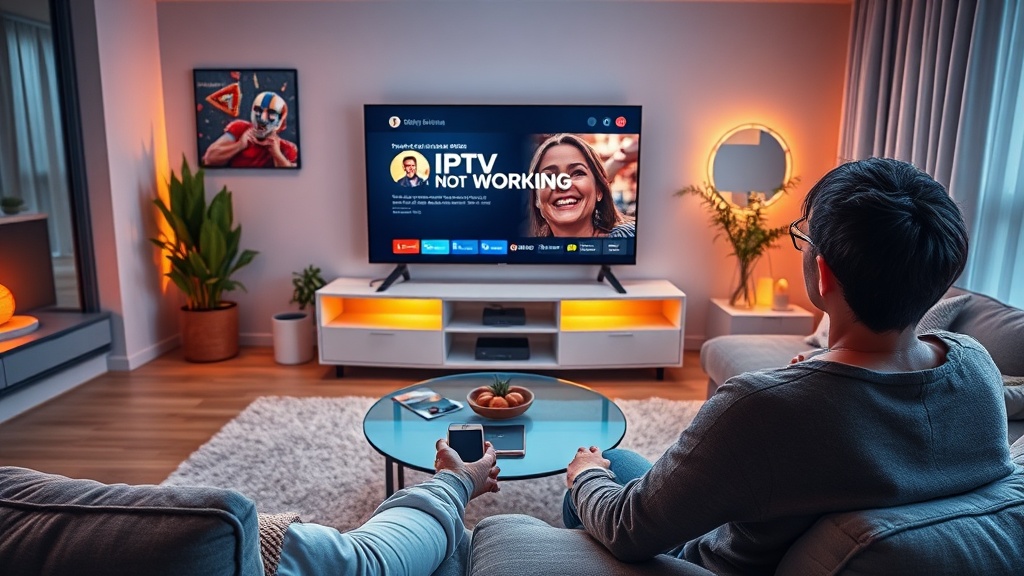
Beyond your internet connection, the device you’re using and the IPTV application itself can be significant sources of problems when your IPTV not working. Outdated software, corrupted app data, or even hardware limitations can all contribute to a less-than-ideal streaming experience. Addressing these issues systematically can often resolve the problem.
First, ensure your IPTV application is up to date. Developers frequently release updates to fix bugs, improve performance, and add new features. Check your device’s app store or the application’s settings for available updates. An outdated app can often lead to compatibility issues and cause your IPTV not working. Similarly, make sure your streaming device’s operating system (e.g., Android TV, Fire OS, Roku OS) is also running the latest version. System updates often include critical bug fixes and performance enhancements that can directly impact IPTV playback.
If updating doesn’t help, try clearing the cache and data for your IPTV application. Over time, cached data can become corrupted, leading to performance issues. On most Android-based devices, you can do this through the device’s settings under “Apps” or “Applications.” Find your IPTV app, then select “Storage” and choose “Clear Cache” and “Clear Data.” Be aware that clearing data will usually log you out of the app, so you’ll need to re-enter your credentials. This is a common fix when your IPTV not working due to app-specific glitches.
Consider the age and specifications of your streaming device. Older devices might struggle to handle the demands of modern IPTV streams, especially in higher resolutions. If you’re using an older model, upgrading to a newer, more powerful device designed for 4K streaming might be necessary. You can find compatible devices and their specifications on pages like IPTV compatible devices. Sometimes, a simple reboot of your device can also clear temporary glitches, so don’t overlook this basic troubleshooting step if your IPTV not working.
What to Do When Your IPTV Provider’s Service is Down or Experiencing Issues
Even with a perfect internet connection and a fully updated device, your IPTV not working could be due to issues on your IPTV provider’s side. Server downtime, maintenance, or unexpected technical difficulties can interrupt your service. Recognizing when the problem lies with your provider is key to avoiding unnecessary troubleshooting on your end.
The first step is to check your provider’s official channels for announcements. Many IPTV providers have social media pages (Twitter, Facebook), Telegram groups, or a status page on their website where they post updates about service interruptions or planned maintenance. A quick search can often confirm if there’s a widespread issue. If other users are reporting similar problems, it’s highly likely the issue is with the provider, and your IPTV not working is not an isolated incident.
If you can’t find any public announcements, try contacting their customer support. Most reputable providers offer various ways to get in touch, including live chat, email, or a support ticket system. Provide them with as much detail as possible, including your account information, the specific channels or content that aren’t working, and any error messages you’re receiving. They can often check the status of your connection to their servers and diagnose the problem remotely. Some issues, like an expired subscription, can also cause your IPTV not working, and support can confirm this.
Be patient. If the provider is experiencing a major outage, it might take some time for them to resolve it. Continuously contacting them won’t necessarily speed up the process. Instead, monitor their official channels for updates. During these times, it might be helpful to have a backup streaming option, especially if you rely on IPTV for live events. While frustrating, provider-side issues are usually temporary, and your service will eventually be restored, fixing your IPTV not working.
Advanced Troubleshooting for Persistent IPTV Not Working Problems
When basic troubleshooting steps haven’t resolved your IPTV not working issues, it’s time to delve into more advanced solutions. These methods address less common but equally frustrating problems that can prevent your IPTV service from functioning correctly. Sometimes, the issue lies deeper than just a simple restart or update.
One advanced step involves checking for DNS issues. Your Domain Name System (DNS) server translates website names into IP addresses. If your DNS is slow or unreliable, it can affect streaming performance. You can try changing your device’s DNS settings to a public DNS server like Google DNS (8.8.8.8 and 8.8.4.4) or Cloudflare DNS (1.1.1.1 and 1.0.0.1). This can often improve resolution times and bypass issues with your ISP’s default DNS, which might be causing your IPTV not working.
Another area to investigate is your firewall or antivirus software. Sometimes, these security measures can inadvertently block legitimate IPTV traffic, interpreting it as a threat. Temporarily disable your firewall or antivirus to see if your IPTV service starts working. If it does, you’ll need to add an exception for your IPTV application or service in your security software’s settings. Be cautious when disabling security features and only do so for a brief period to test if your IPTV not working is linked to this.
If you’re using a VPN, ensure it’s configured correctly and that your chosen server location isn’t causing issues. Some IPTV providers have restrictions on VPN usage or specific regions. Try connecting to different VPN servers or disabling the VPN altogether to see if that resolves the problem. For specific channel availability, you might want to check IPTV channels list to ensure the content is available in your region. Persistent IPTV not working can be complex, but these advanced steps cover a wider range of potential causes.
Optimizing Your Setup to Prevent Future IPTV Not Working Issues
Prevention is always better than cure, especially when it comes to technology. By optimizing your IPTV setup, you can significantly reduce the likelihood of encountering “IPTV not working” problems in the future. A well-configured system ensures a more reliable and enjoyable streaming experience in 2026 and beyond.
Invest in a reliable internet connection. This cannot be overstated. Opt for the highest speed and most stable connection your budget allows. If possible, use a wired Ethernet connection for your primary IPTV device. This eliminates the variables of Wi-Fi interference, range limitations, and signal drops, which are common causes of your IPTV not working. If Wi-Fi is your only option, consider a mesh Wi-Fi system or a powerful router placed strategically to maximize signal strength.
Regularly update your devices and applications. Set your streaming device and IPTV app to update automatically, or make it a habit to check for updates weekly. Keeping software current ensures you benefit from the latest bug fixes, security patches, and performance improvements, which are crucial for preventing your IPTV not working. Outdated software is an open invitation for problems.
Consider using a dedicated streaming device. While smart TVs have built-in apps, a separate streaming box (like an Android TV box, Apple TV, or Fire TV Stick) often offers better performance, more frequent updates, and greater flexibility. These devices are designed for continuous media consumption and can handle the demands of IPTV more efficiently than some integrated smart TV systems, reducing instances of your IPTV not working. Moreover, managing your subscription and understanding your options with providers like IPTV Put pricing can help you stay on top of your service.
Finally, monitor your subscription status. Set reminders for renewal dates to avoid unexpected service interruptions. Keep contact information for your IPTV provider readily accessible, so if your IPTV not working, you can quickly reach out for support. A little proactive maintenance goes a long way in ensuring a smooth and uninterrupted IPTV experience.
FAQ: Getting Your IPTV Back on Track
Q1: My IPTV was working fine yesterday, but today it’s not working. What’s the first thing I should check?
A: The very first thing you should check is your internet connection. Perform a speed test and try restarting your router and modem. Many “IPTV not working” issues are resolved by simply resetting your network equipment. If your internet is fine, then check if your IPTV application or device needs a restart or an update.
Q2: Why is my IPTV constantly buffering even with a fast internet connection?
A: Constant buffering, even with good speeds, can be due to several factors. It might be Wi-Fi interference, a congested network (too many devices using bandwidth), an outdated IPTV app, or even an overloaded server on your provider’s end. Try connecting via Ethernet, clearing your app’s cache, and checking your provider’s status updates. If your IPTV not working smoothly, these are common culprits.
Q3: My IPTV app keeps crashing. What can I do?
A: If your IPTV app keeps crashing, try clearing its cache and data in your device’s settings. If that doesn’t work, uninstall and then reinstall the app. Ensure your device’s operating system is also up to date. Sometimes, a full factory reset of the streaming device can resolve persistent app issues, but this should be a last resort.
Q4: My IPTV provider says their servers are fine, but my IPTV is still not working. What now?
A: If your provider confirms no server issues, the problem likely lies with your local setup. Re-verify your internet connection, try a different device if possible, check for any firewall or VPN conflicts, and consider changing your DNS settings. Ensure your subscription is active and all login details are correct. If your IPTV not working, a methodical review of your local environment is crucial.
Q5: Can using a VPN cause my IPTV not working?
A: Yes, a VPN can sometimes cause your IPTV not working. Some IPTV providers have policies against VPN usage, or your VPN server might be slow or blocked. Try disabling your VPN temporarily to see if the issue resolves. If it does, you might need to use a different VPN server, a different VPN service, or configure an exception for your IPTV application.
Related IPTV Services
You may also visit the following websites for similar services:
Related Articles
Interested in IPTV Lifetime?
Get premium IPTV lifetime access with 25,000+ channels and 26,000+ movies. Contact us to learn more about our lifetime IPTV subscription plans.
View IPTV Lifetime Plans